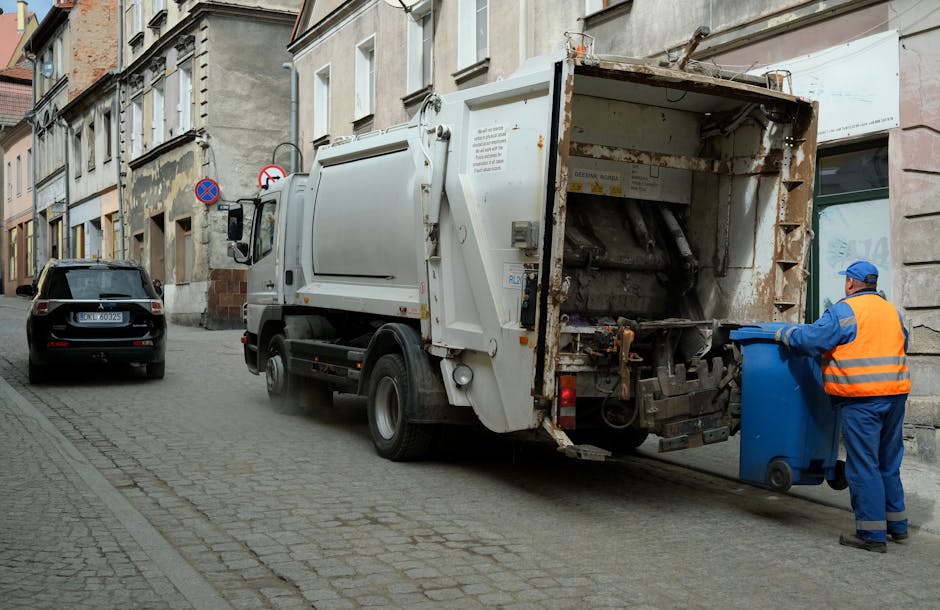
Same day rubbish removal Hanwell W7 insider tips avoid delays

If you need rubbish gone today, the clock suddenly feels very real. Maybe a tenant has left a flat in a state, builders have filled the hallway with rubble, or a garage has become one of those spaces you avoid opening. Either way, same day rubbish removal in Hanwell W7 can be a lifesaver - but only if you handle the booking properly and avoid the little snags that slow everything down.
This guide shares practical, local-minded insider tips to help you move faster, cut delays, and make the whole process smoother from first call to final sweep. We'll cover what happens on the day, what to prep in advance, what mistakes catch people out, and how to choose the right removal option for your situation. Nothing fluffy. Just the stuff that actually helps when you want the job done before the day runs away from you.
Why Same day rubbish removal Hanwell W7 insider tips avoid delays Matters
When people search for same-day waste clearance, they usually do not want a lecture. They want the clutter gone, the path clear, and the house or site back under control. Fair enough. In Hanwell W7, that urgency often comes from real pressure: end-of-tenancy deadlines, trades waiting to start, family moves, business clear-outs, or a garden that has turned into a storage zone after a few too many weekends of "we'll sort it later".
The reason delays matter so much is simple. Same-day jobs depend on timing, access, accurate descriptions, and a crew arriving with the right vehicle and enough capacity. Miss one of those pieces and suddenly the afternoon slot becomes a next-day slot. That is especially frustrating when you have already rearranged your workday, chased keys, or warned neighbours about a noisy clearance. Nobody wants to do the same job twice, and no one wants to stand around waiting in the cold while the van gets stuck elsewhere.
There is also a cost to delay beyond inconvenience. If waste stays on site, it can block access, slow other contractors, create safety issues, or add stress to an already packed day. A good same-day clearance plan reduces all of that. It gives you a cleaner handover, a clearer schedule, and much less back-and-forth. And truth be told, that calm feeling once the pile is gone is worth a lot.
Expert summary: The fastest rubbish removal jobs are rarely about luck. They are about preparation, clear information, sensible access, and choosing a provider who can match the job properly the first time.
How Same day rubbish removal Hanwell W7 insider tips avoid delays Works
Same-day rubbish removal normally follows a fairly straightforward pattern. You contact the provider, describe what needs clearing, get a price or estimate, agree a collection window, and then the team arrives to assess, load, and remove the waste. Simple on paper. In practice, the quality of your information determines how smooth that day feels.
The key thing to understand is that same-day does not mean "no planning needed". In fact, the more urgent the job, the more important the planning becomes. If your waste is described badly, hidden behind locked doors, mixed with restricted items, or spread across several awkward locations, the team may still complete it - but the delay risk rises sharply.
Most delays happen in one of five places:
- Booking stage: unclear photos, missing details, or not stating access issues.
- Arrival stage: no one available to grant entry or confirm the waste pile.
- Loading stage: waste not pre-sorted, blocked by furniture, or spread between floors.
- Compliance stage: restricted items or special handling requirements not mentioned early.
- Payment stage: payment method confusion or approval delays, which sounds boring until you're the person waiting.
If you want a clearer starting point, the main waste removal service page can help frame what a general clearance covers. For larger or more specific jobs, there are dedicated pages for house clearance, office clearance, and builders waste clearance, all of which become relevant when the same-day request is not just a few bin bags.
Key Benefits and Practical Advantages
The obvious benefit is speed, but that is only part of the story. Same-day rubbish removal is really about momentum. Once the waste is out of the way, everything else can move. Decorators can start, estate agents can take photos, a landlord can hand over keys, or a family can reclaim a room that has felt unusable for weeks.
There are a few practical advantages worth spelling out:
- Less disruption: a quick clearance keeps hallways, driveways, and shared access areas freer for everyone.
- Lower stress: instead of juggling bags and deadlines, you hand the job over and get on with your day.
- Better space planning: once clutter is gone, it is much easier to see what actually needs doing next.
- Cleaner handover: especially useful for rental properties, offices, and property sales.
- Reduced trip hazards: loose waste, broken furniture, and packaging can be awkward underfoot.
For many people, the real value is not the van turning up; it is the mental relief that follows. That sounds soft, but it is true. A clear room changes how a space feels. You notice the light again. You can hear yourself think. A bit dramatic? Maybe. Still accurate.
It also helps to match the right service to the material type. For example, awkward household items might be better suited to furniture clearance or mattress and sofa disposal, while broken appliances may need fridge and appliance removal. That kind of fit can shave time off the process because the team knows what to expect before it arrives.
Who This Is For and When It Makes Sense
This service makes sense for a surprisingly wide range of people. It is not only for emergency clean-ups or dramatic last-minute moves. In many cases, same-day rubbish removal is simply the most practical option.
You may need it if you are:
- moving out and need the property cleared before handover
- a landlord preparing for new tenants
- a homeowner tackling a sudden clear-out before visitors, builders, or redecoration
- a business dealing with office clutter, archive waste, or old furnishings
- a tradesperson with leftover materials after a job
- someone whose garage, loft, or garden has quietly filled up over time
For residential jobs, the decision often comes down to access and volume. A small flat clearance can be straightforward if the waste is grouped and easy to reach, while a larger household job may need more detailed planning. If you're dealing with a single room, flat clearance can be the right fit. If it is a broader property clean-up, home clearance or house clearance may be more appropriate.
For business owners, the same-day need often comes from downtime. A blocked office storeroom, piled-up packaging, or old desks in the way can slow the workday more than most people expect. If that sounds familiar, business waste removal and office clearance are worth exploring early.
Step-by-Step Guidance
If you want to avoid delays, the process should be treated like a small project. Not a big one. Just enough structure to stop avoidable problems.
- List everything you need removed. Be specific. "A few bits" helps nobody. Note furniture, bags, rubble, appliances, garden waste, or mixed items separately.
- Take clear photos. Get wide shots and close-ups. Include stairs, narrow entrances, parking restrictions, and anything unusual. A picture really can save twenty minutes of guesswork.
- Check access. Can a van park nearby? Are there coded gates, tight turns, low branches, or limited loading areas? Mention all of it.
- Separate restricted items early. Hazardous materials, certain chemicals, and special waste often need different handling. If in doubt, say so before the team arrives.
- Clear a path. Move anything that blocks the waste. Even a small hallway pile can slow a crew down more than expected.
- Confirm the collection window. Ask how the team will contact you and who needs to be on site when they arrive.
- Prepare payment and approval details. Avoid the awkward "just a minute while I find my card" moment. Happens more often than people admit.
- Keep the waste grouped. One tidy pile is much faster than ten scattered ones. It sounds basic because it is basic, and it works.
If your clearance involves building materials, have a look at what can go in a skip as a useful reference point for common accepted and restricted waste types. It is not a full rulebook, but it helps people understand where the boundaries usually sit.
Expert Tips for Better Results
Here is where the insider part matters. Small choices can save a lot of time.
1. Send photos before you ask for a collection
Photos are the quickest way to reduce back-and-forth. A good image lets the provider gauge volume, loading difficulty, and whether extra help may be needed. Try to include the whole pile, not just the top layer. That hidden "second pile" at the back is often where delays start.
2. Mention stairs, lifts, and parking honestly
It is tempting to downplay awkward access, but that can backfire. If the team thinks it is a ground-floor job and it turns out to be four flights up, the schedule can slip. On busy days, that creates knock-on effects. Better to say too much than too little.
3. Group similar waste together
Mixed waste is fine in many cases, but grouping like with like speeds things up. Cardboard with cardboard, furniture with furniture, garden waste in one area, and so on. It makes the loading flow more naturally.
4. Watch for item-specific services
Some items are just easier when treated as their own category. For instance, a broken freezer is not the same as a wardrobe. If your job includes an appliance, a sofa, or a mattress, the relevant specialist page can help: fridge and appliance removal and mattress and sofa disposal.
5. Don't leave the decision-making to the last minute
If you need someone else to approve the job, make sure they are reachable. A lot of delays come from "I just need to check with the landlord / director / partner / site manager". Totally normal. Still delays the van.
6. Be realistic about "same day"
Same-day services are fast, but they still depend on capacity and location. If you call late in the day, or during a very busy period, you may still get a slot - just not the exact one you imagined. Best to be flexible where you can.
A slightly old-school but effective trick: walk the route from the waste to the exit before the crew arrives. You will spot the tight corner, the heavy item, the wobbling door, all the stuff that is easy to ignore when you are in a rush.
Common Mistakes to Avoid
Most delays are avoidable. Not all, but most. And the most common ones are very ordinary.
- Giving a vague description: "some rubbish" is too broad for a same-day job.
- Ignoring access problems: gate codes, parking restrictions, and narrow stairs matter.
- Mixing restricted materials with normal waste: this can force a pause while the team checks handling requirements.
- Forgetting to mention quantity: one sofa is a different job from a room full of furniture.
- Leaving waste spread across several rooms: that creates avoidable loading time.
- Not preparing someone to meet the crew: if nobody is available, the job can stall quickly.
- Assuming all clearances are the same: garden, loft, office, and builders waste each bring different practical issues.
There is also the classic "I thought it was all fine to take" mistake. Sometimes it is. Sometimes it is not. If you have anything that might be hazardous or unusual, say so upfront and avoid the scramble on arrival. If the job involves more sensitive material, a service such as hazardous waste disposal or confidential shredding may be relevant.
Tools, Resources and Recommendations
You do not need fancy equipment to prepare for a same-day clearance. A few basic tools will do the job nicely.
- Phone camera: take clear images of the waste and access points.
- Sticky notes or labels: useful for marking items to keep, donate, or remove.
- Gloves and closed shoes: sensible if you are moving small pieces before the team arrives.
- Heavy-duty bags or boxes: helpful for loose waste, documents, and smaller items.
- Tape or string: useful for bundling lightweight materials.
For planning, the service pages on this website can help you understand which removal type fits your job best. A loft packed with long-forgotten boxes is not the same as a cluttered garage, and a post-refurbishment site is not the same as a garden pile. For example, loft clearance and garage clearance cover very different access and loading patterns. Likewise, garden clearance and builders waste clearance usually require a different approach again.
If you are weighing up whether to book now or organise the waste yourself, the practical question is this: how much time do you want to spend moving, loading, sorting, and disposing of it all? Sometimes DIY is fine. Sometimes it is a false economy, especially when you are already up against the clock.
Law, Compliance, Standards, or Best Practice
For rubbish removal in the UK, the safest approach is to treat waste responsibly, keep restricted materials separate where required, and make sure the company you use follows proper handling practices. You do not need to become a compliance expert overnight, but you should understand the basics.
Good practice usually means:
- describing waste accurately before collection
- not hiding hazardous or restricted items inside general waste
- making sure access is safe for crews and anyone else on site
- choosing a provider that can explain how waste is handled, sorted, and moved onward
- keeping records or receipts where they matter for business or landlord use
For commercial or shared properties, it is also wise to check insurance and safety expectations before the team arrives. If a job involves awkward access, heavier items, or a busy site, the provider's insurance and safety information and health and safety policy can be useful references. This is not paperwork for paperwork's sake. It protects everyone from the kind of avoidable problem that ruins an otherwise straightforward day.
Recycling and reuse are also part of best practice, where feasible. Not every item can be reused, of course, but sensible sorting and responsible transfer matter. If that is important to you, have a look at recycling and sustainability. It gives a better sense of how a thoughtful clearance approach can reduce waste going to landfill.
Options, Methods, or Comparison Table
There are usually a few ways to clear rubbish fast. The right one depends on volume, access, item type, and how urgently you need the space back.
| Method | Best for | Pros | Watch-outs |
|---|---|---|---|
| Same-day rubbish removal | Urgent mixed waste, furniture, household clutter, quick turnarounds | Fast, flexible, labour handled for you | Needs clear access and accurate descriptions |
| Skip hire | Longer projects, ongoing work, bulky builders waste | Good if waste will build up over several days | Needs space and self-loading; not ideal for tight or urgent clearances |
| DIY trips to the tip | Small volumes, sorted waste, people with time and transport | Can work for light loads | Time-consuming, tiring, and not always practical for same-day deadlines |
If you are unsure whether a skip or a direct clearance is more suitable, what can go in a skip is a useful comparison point. It helps people understand why some jobs are better handled by a removal team rather than a parked container.
Practical takeaway: if speed matters most, same-day rubbish removal usually wins. If your waste will keep growing for several days and you have space, a skip may be better. If the job is tiny and you have a free afternoon, DIY can work - but be honest about whether you actually have that free afternoon.
Case Study or Real-World Example
Here's a typical local-style scenario. A landlord in Hanwell gets a call just after lunch: new tenants are due the next morning, but the previous tenant has left a mixture of broken furniture, bagged rubbish, and an old fridge in the flat. The hallway is narrow, the building has shared access, and there is no room for delay. Not ideal, to put it mildly.
The fastest route is not panic. It is preparation. The landlord sends photos, confirms the floor level, notes the access code, and separates the fridge from the rest of the items. The team arrives with a clear understanding of what is there and what needs handling carefully. Because the information is accurate, the collection is quicker, smoother, and less stressful than it might have been. The flat is ready on time.
What made the difference? Not magic. Just details.
Another common example is a garden clear-out after a weekend of pruning, broken plant pots, old timber, and a rotting shed panel or two. If the waste is left scattered around the garden, the crew spends time gathering it. If it is stacked neatly near the gate, the job moves much faster. Small effort beforehand, big payoff on the day. That's the whole trick, really.
Practical Checklist
Use this checklist before the collection window opens. It is quick, but it saves hassle.
- Have you described the waste clearly and honestly?
- Have you sent photos showing the full pile?
- Have you mentioned stairs, lifts, parking, or gate access?
- Have you identified anything hazardous, fragile, or unusual?
- Have you grouped the waste into one easy-to-load area?
- Have you cleared a path from the waste to the exit?
- Is someone available to meet the crew if needed?
- Are payment or approval details ready?
- Do you know whether the job is domestic, commercial, builders, or specialist clearance?
- Have you checked whether furniture, appliances, or confidential items need separate handling?
If you are dealing with a larger property or a mixed set of items, the relevant service pages can help you narrow things down before you book. For example, a full property clear may lean toward home clearance or house clearance, while a worksite may be better matched to builders waste clearance.
Conclusion
Same-day rubbish removal in Hanwell W7 works best when you treat it as a fast, practical handoff rather than a rush job. The winning formula is simple: clear information, sensible access, the right service for the waste type, and a bit of pre-arranging on your side. Do that, and you will avoid most of the delays that frustrate people on urgent clearance days.
In real life, the difference between a stressful afternoon and a smooth one is often tiny. A photo sent early. A path cleared. A gate code passed on. A sofa moved before the crew arrives. Not glamorous, but effective.
If you want the process to feel easier from the start, explore the service pages that best match your waste type, compare your options carefully, and avoid leaving the messy bits until the last minute. You do not need a perfect plan. Just a decent one. That is usually enough.
Get a free quote today and see how much you can save.
And if today feels a bit chaotic, that is alright. Most clearances start that way. The good news is, they do not have to stay that way.
Frequently Asked Questions
How fast can same-day rubbish removal usually happen in Hanwell W7?
It depends on availability, the size of the job, and how clearly the waste is described. The more accurate your information, the better the chance of a smooth same-day slot.
What details should I give to avoid delays?
Send photos, explain the amount and type of waste, mention access issues, and note whether anything heavy, fragile, or unusual is included. Straightforward details save time.
Do I need to sort the rubbish before collection?
Not always, but grouping similar items makes the job faster. Keep restricted or special items separate and tell the provider about them in advance.
Can I book same-day removal for furniture?
Yes, furniture is commonly cleared on a same-day basis if access and volume are manageable. For sofas, mattresses, and similar items, specialist disposal pages may be useful.
What if I have appliances like a fridge or freezer?
Say so early. Appliances can require different handling from general household waste, so it helps to identify them before the crew arrives.
Is same-day rubbish removal more expensive than booking ahead?
It can be, but not always. Pricing usually depends on the volume, access, waste type, and timing. A clear description helps avoid surprise additions later.
Can businesses use same-day rubbish removal too?
Absolutely. Offices, shops, and workspaces often need urgent clearance when storage areas, refurbishments, or handovers are under pressure.
What happens if the team cannot access the waste quickly?
Delays can happen if keys, codes, parking, or route access are not ready. That is why sharing access details before the appointment matters so much.
How do I know whether I need house clearance or general waste removal?
If you are clearing a whole property or a large part of one, house clearance or home clearance may fit better. For mixed everyday rubbish, general waste removal is usually more suitable.
Are hazardous items included in same-day rubbish removal?
Not automatically. Hazardous or restricted items need careful handling, so mention them in advance and check whether a dedicated disposal service is needed.
Can I get help with confidential paperwork or sensitive items?
Yes, if you have documents or materials that need extra care, a confidential shredding service may be the right route.
What is the easiest way to prevent last-minute problems?
Be honest, be specific, and prepare the space before the crew arrives. That sounds basic, but it is the difference between a tidy collection and a day full of avoidable hassle.